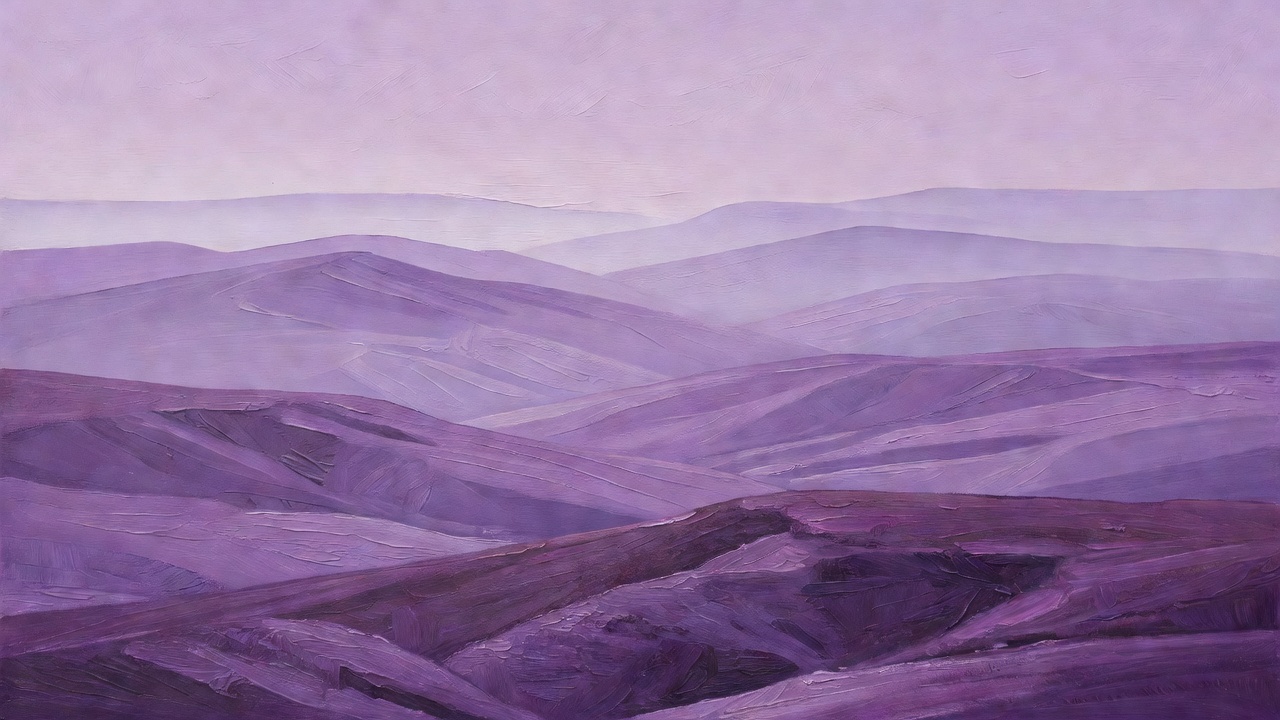
Stand on a hill on a clear morning and look toward the farthest ridge. It is paler than the hill beneath your feet, cooler in colour, and its edges are soft. Painters have a name for this: aerial, or atmospheric, perspective. It is the single most powerful device for making a flat canvas feel deep, and it costs nothing but observation.
The Science Behind the Haze
Air is not empty. Molecules, moisture and dust scatter light, and the more air between you and an object, the more scattered light is added to what you see. Leonardo da Vinci described the effect in his notebooks around 1500, advising that distant objects be painted lighter and more veiled. Shorter wavelengths scatter most, which is why far hills often look cool and violet-grey, while sunsets, seen through a long path of atmosphere, look warm.
In practice, aerial perspective works on four levers at once: value (distant forms move toward the sky's value), saturation (colour weakens), temperature (it usually cools), and edges (detail and contrast soften). Pull all four together and the illusion is convincing; pull only one and it can look like fog.
Value Comes First
Most landscapes can be reduced to three or four value masses: sky, distant land, middle ground and foreground. In daylight the sky is usually the lightest mass, the ground plane the next, slanted planes such as hillsides darker, and upright forms like trees darkest. Painters such as Edgar Payne, in his 1941 book Composition of Outdoor Painting, codified simple value patterns that remain useful. Squint at a scene, or at a painting you are considering buying: if the value masses are clear, the picture will hold from across a room.
The Golden Hour and the Blue Hour
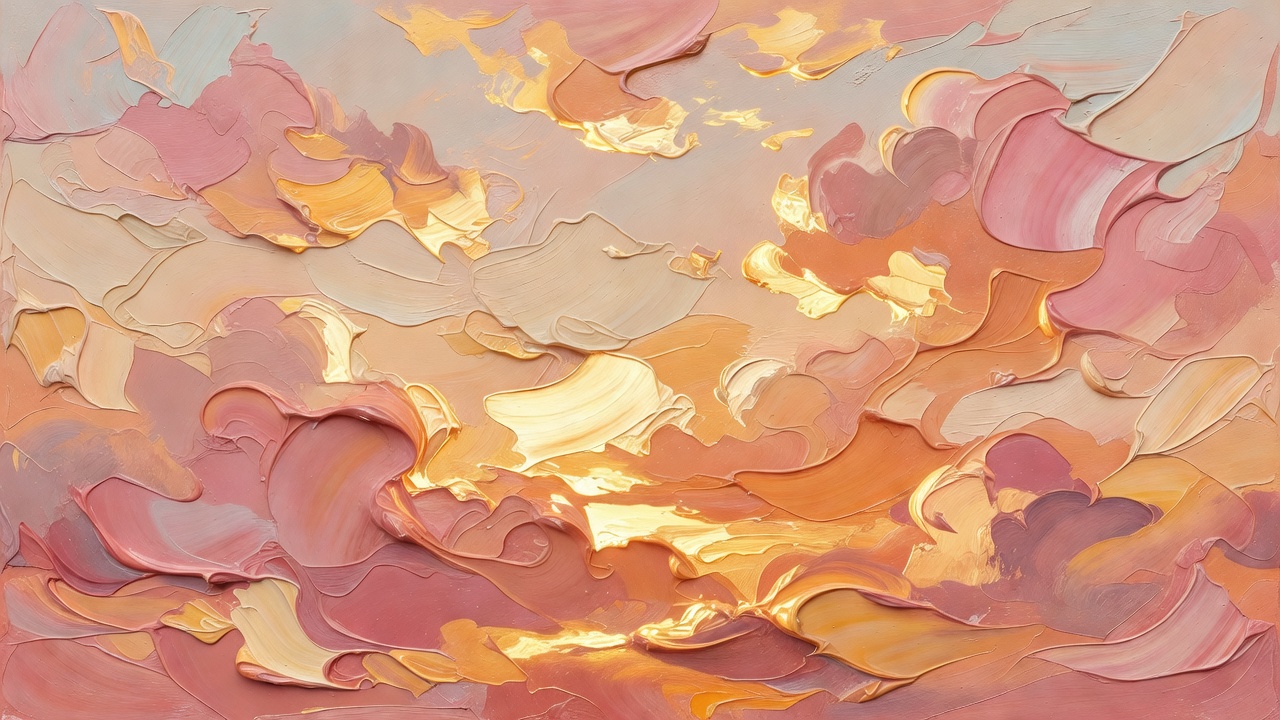
Shortly after sunrise and before sunset, the sun sits low and its light travels through more atmosphere. Shadows stretch, forms gain modelling and warm light contrasts with cool shadow. This golden hour is why Claude and Turner so often placed the sun near the horizon. The blue hour that follows sunset offers the opposite: soft, sourceless light and deep, unified colour, beloved of nocturne painters such as James McNeill Whistler.
The challenge is speed. Golden light can last under an hour. Plein air painters often prepare a toned canvas, pre-mix shadow colours and paint the light effect first, finishing drawing later.
Composing the Horizon
Where you place the horizon decides the painting's subject. A low horizon, as in Dutch skyscapes by Jacob van Ruisdael, gives the sky the stage. A high horizon emphasises land, path and pattern. Avoid splitting the canvas exactly in half unless you want stillness. Lead the eye with a road, river or fence line, and give it a resting place: the point of greatest contrast should sit where you want attention to land, often near one of the thirds.
A Landscape Pigment Palette
A limited palette encourages harmony. The pigments below, identified by their Colour Index names, are durable choices with excellent lightfastness ratings under ASTM D4303 testing.
| Pigment | Colour Index | Role in a landscape | Lightfastness |
|---|---|---|---|
| Titanium White | PW6 | Opaque highlights, cloud tops, mixing tints for distance | ASTM I |
| Yellow Ochre | PY43 | Fields, sunlit earth, warming greens gently | ASTM I |
| Cadmium Yellow Light | PY35 | Bright foliage, golden-hour light | ASTM I |
| Cadmium Red Light | PR108 | Sunset accents, neutralising greens | ASTM I |
| Burnt Sienna | PBr7 | Toned grounds, tree trunks, warm darks | ASTM I |
| Ultramarine | PB29 | Skies, cool shadows, distant hills | ASTM I |
| Viridian | PG18 | Cool greens, water, adjusting sky near the horizon | ASTM I |
Mix Ultramarine with Burnt Sienna for a range of rich, transparent darks far livelier than tube black. Add a touch of the sky colour to every distant mixture and the whole picture will seem to share one atmosphere.